
(Nurseries & Market Gardens)
Written by David Lawrie (researcher of Jam today and Jam tomorrow) & Angela Parton chair Friends of Feltham Green & member of Feltham History Group
Approved by Feltham History
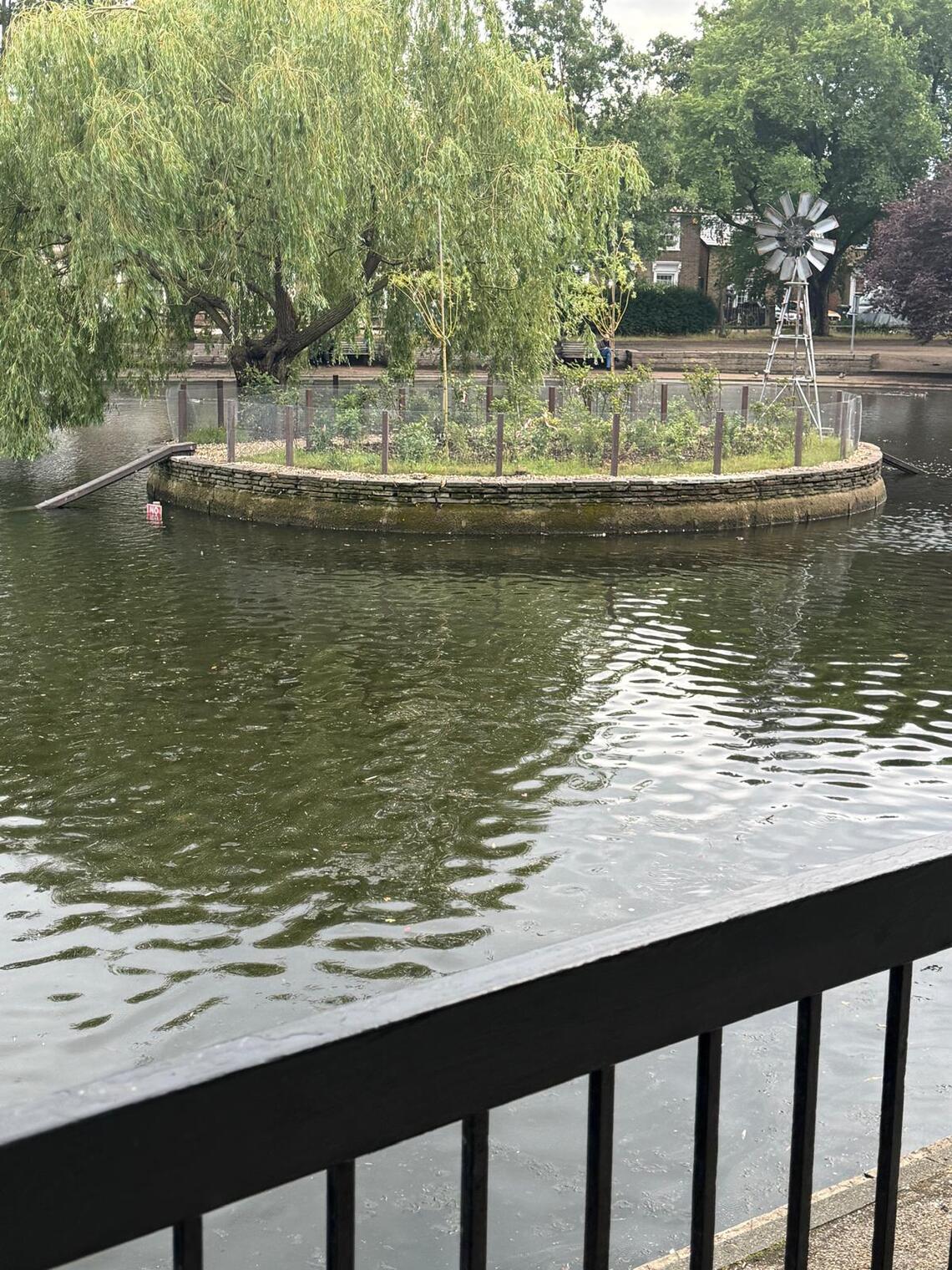
Feltham Green Windpump 2026
At Feltham Green, part of Friends of Feltham Green improvement masterplan, we asked a local resident (who also kindly built the Stephenson Rocket at Feltham Train station and 'The Great Fire of Feltham' tree bench at Elmwood Ave) to build a model of a windpump to be installed on the island at Feltham Pond. This signifies not only Feltham’s past but also Feltham’s future of using wind power.
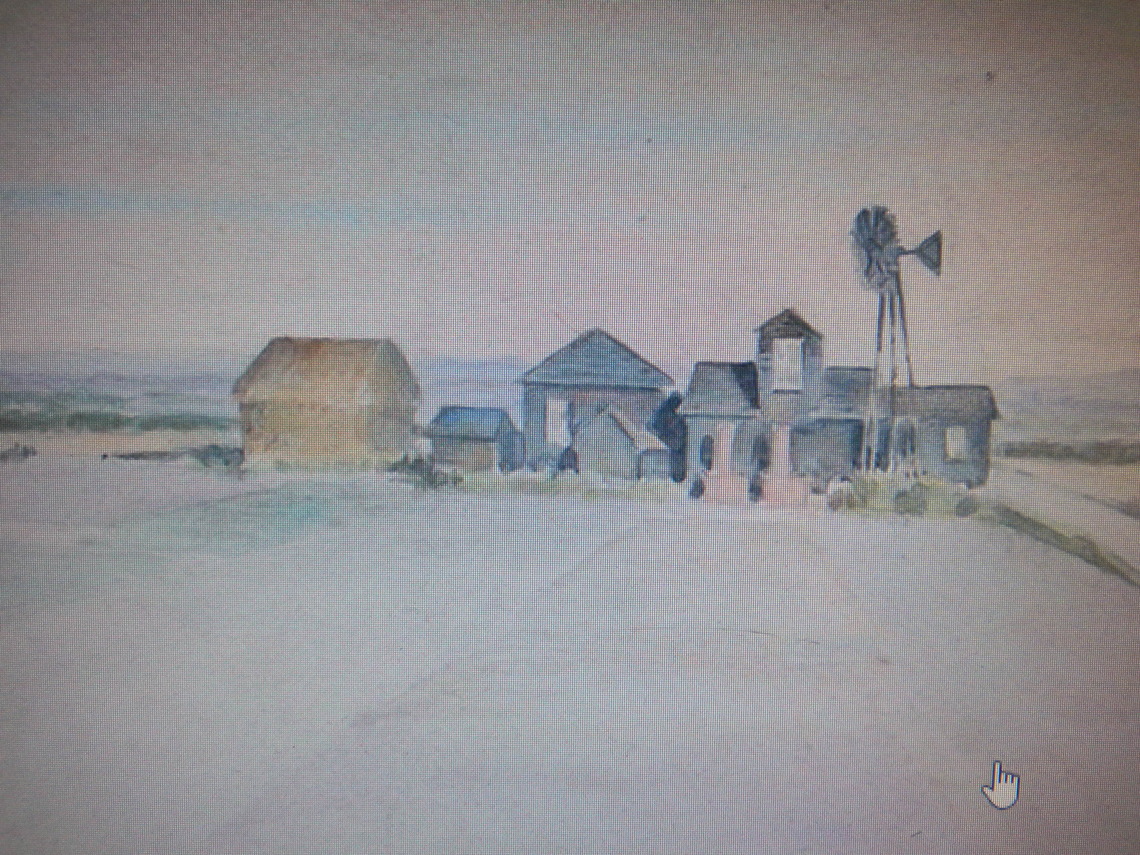
Painting of a Windpump Feltham
By Ian Sayer
Many of the nurseries around Twickenham, Isleworth, Whitton, Hounslow and Brentford were close to the River Thames and its tributaries, and the geology of the region - low lying with a loamy soil - meant that the land retained its moisture well and was well suited to the cultivation of a large variety of fruit and vegetables for the growing demands of an expanding London.
John Foot General View of the Agriculture of Middlesex 1794 noted that:
“… Brentford, Isleworth and Twickenham are almost a garden and orchard of apple trees, pears, plums, cherries etc. Isleworth is also celebrated for strawberries”.
Further to the west and north, away from the immediate floodplain and its rich alluvium deposits, the geology of the London Basin presented challenges to some prospective growers.
John Willis & Sam Segers famous florists in South Kensington granted Royal warranty in 1886 had 4 acres at Bedfont Lane.
Also in and around Feltham, an examination of the 1912 OS map reveals that Veitch Nursery off Bedfont Lane had 3 windpumps - of which are near to small rectangles. Similar shapes are marked in the Hampton nurseries alongside another windpump, marked t'k or tank, so it may be that these unmarked rectangles are in fact water storage tanks.
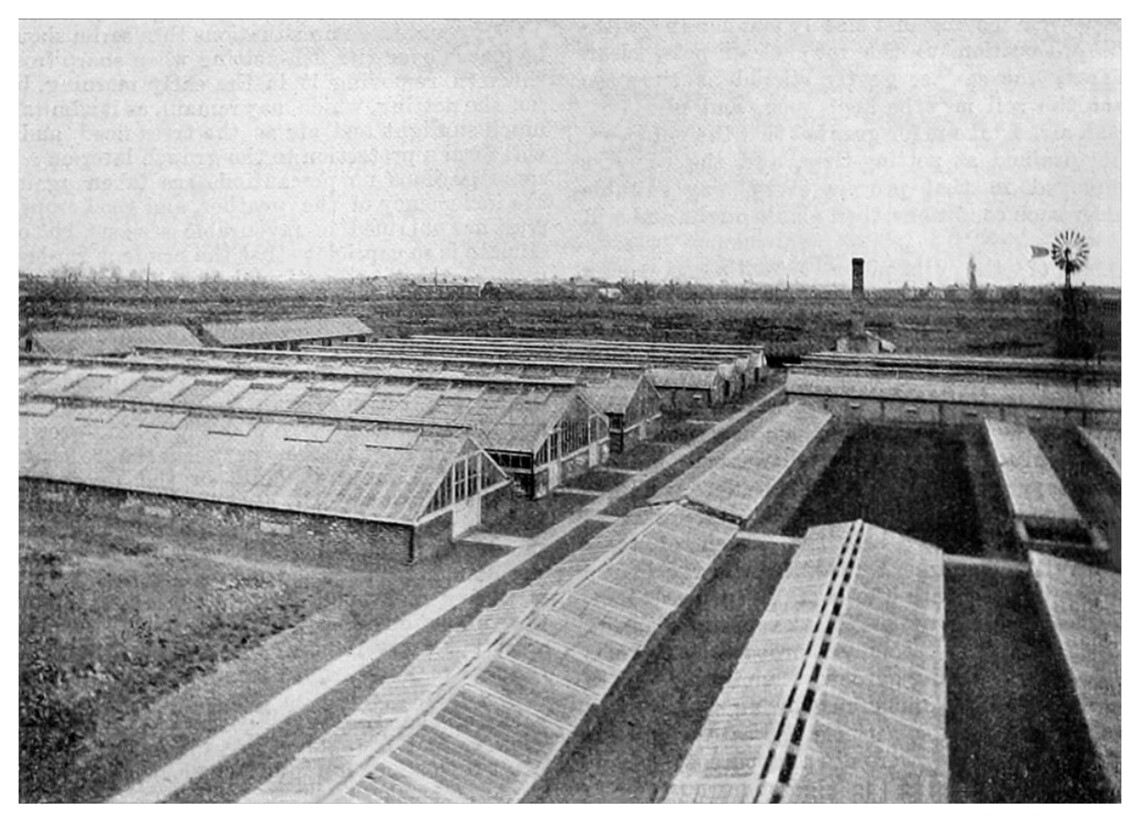
Veitch Nurseries, Bedfont Lane
(photo from Caradoc Doy)
(Windpump right hand side top)
The first image of Feltham in "The Veitch Nurseries" shows one of the windpumps adjacent to both glasshouses (for carnations and chrysanthemums) and a boiler house.
Could the need for "hot house" steam in the glasshouses be one reason for a constant demand for water - as well as the irrigation.
Locals recall the wind pumps surviving down Bedfont Lane into the early 1960’s, when removed to build the site of Southville school.

Family photo showing windpump background early 1960’s (from FH&B Appreciation Society Facebook)
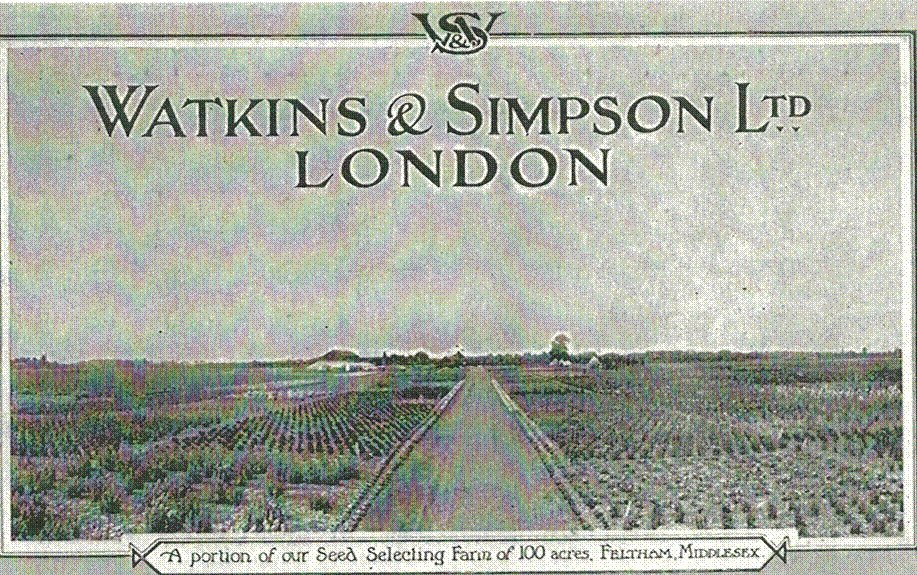
They are still there on the 1934 OS map - as is one marked in the nursery to the east of the borstal, an area called Middle Field locally, which was run by Messrs. Watkins and Simpson as a seed testing and development facility and producer of the 'Feltham first' pea.
Alfred Watkins died in 1937 area around Middle Field was excavated for sand and gravel until the 1960's. Significantly, there were large deposits of silica sand in the area - and this special sand, as well as being used in the glassmaking, foundry and chemical industries, is also used in water filtration.
The 5th windpump was situated beside Longford River, part of which is now Feltham Park. (who owned this windpump still needs to be identified).
The issue for the growers was simple – the quality and fertility of the soil and a reliable source of water to irrigate the crops.
The water table in the Feltham area is generally high as it is situated on heath gravels, which can hold significant amounts of water near the surface, especially in wet winters.
However, seasonal fluctuations in weather conditions mean that levels can drop dramatically during extended dry periods, forcing growers to find alternative water sources to maintain their crops.
The market gardeners who grew under large expanses of glass, like AW Smith in Feltham and those on the Hampton Nurserylands, were able to capture the rainfall and store it in tanks for distribution along pipes inside the glasshouses.
Ventilators that A.W used for his tomato greenhouses was invented by Joseph Rochford of the Lea Valley where they was used also.
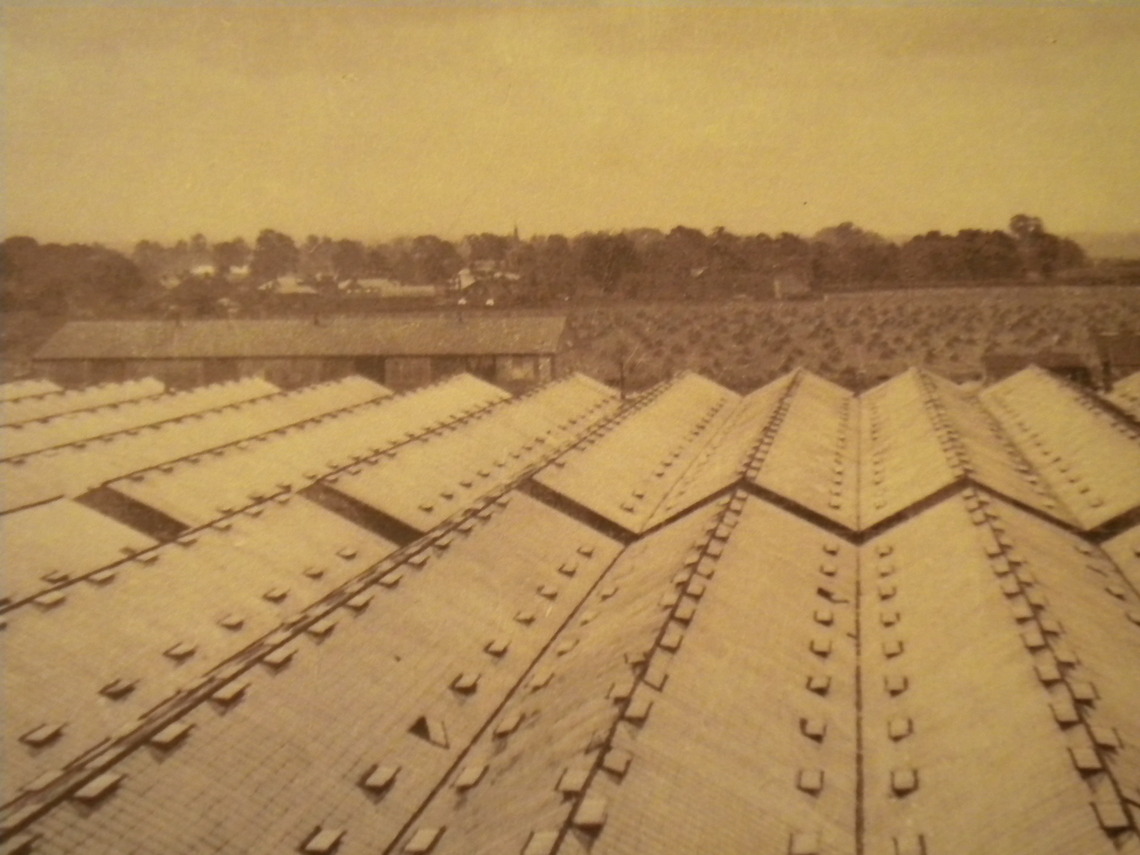
A.W Smith Glass City (now Grosvenor Park Housing Estate constructed 1934)
(Photo from Robert Calder collection)
AW Smith also used large amounts of fresh manure transported from Nine Elms via his railway track from the main line to maintain soil quality across his 1000 acre holdings. In the early years of C20 he spread up to 200 tons per week on the fields.
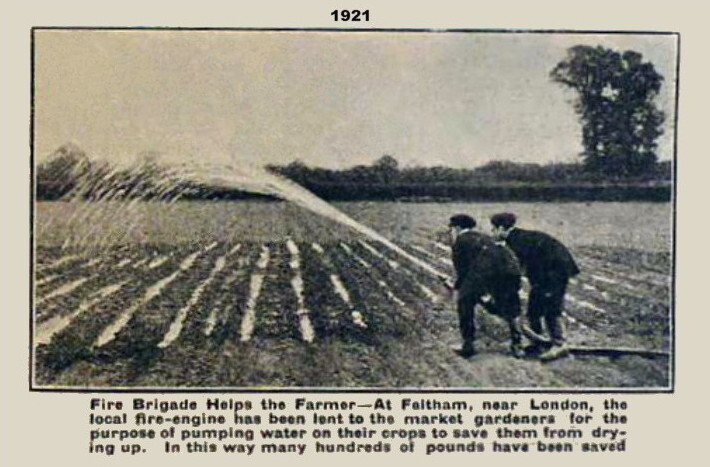
He was not alone in allowing the local fire brigade to practise hose pipe drills on his crops – we know that growers in the Whitton area did the same.
Whilst AW Smith had a large reservoir to store the rainwater captured from his enormous glasshouse for irrigation, Veitch Nurseries and Watkins and Simpson sank bore holes below the water table looking for an aquifer, which is a geological formation that is sufficiently porous and permeable to store and yield a significant quantity of water which could be raised to the surface by a windpump.
Bedfont had the only other known windpump at Burlington Factory (dye and quilt) corner Hatton from Staines opposite St Mary’s Drive 2 ponds one large other small, still see dip to this day. If anybody has more information on this would love to hear from you.
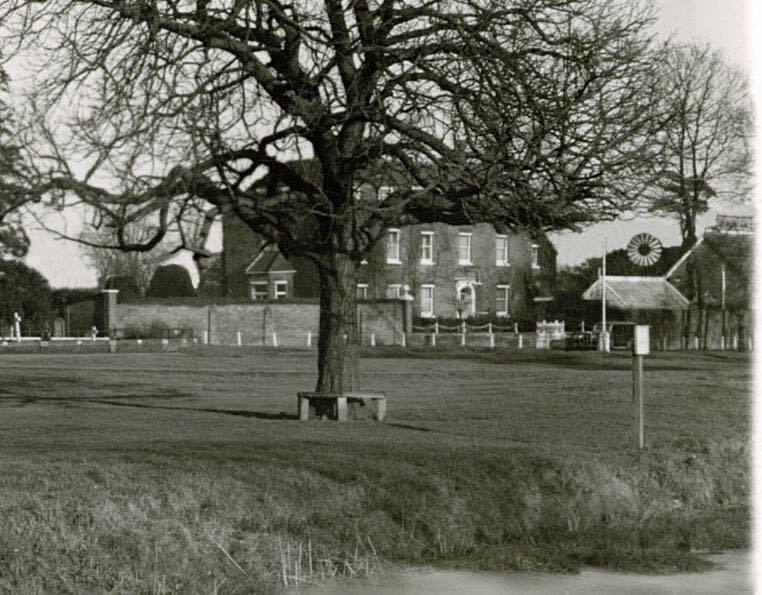
Bedfont windpump c1920’s
In the UK and around the world windpumps are still used to bring water up from underground, plus now land and offshore wind turbines to produce green energy. So we have come a long way from the three legged tripod with a fan using a simple thing as wind.